
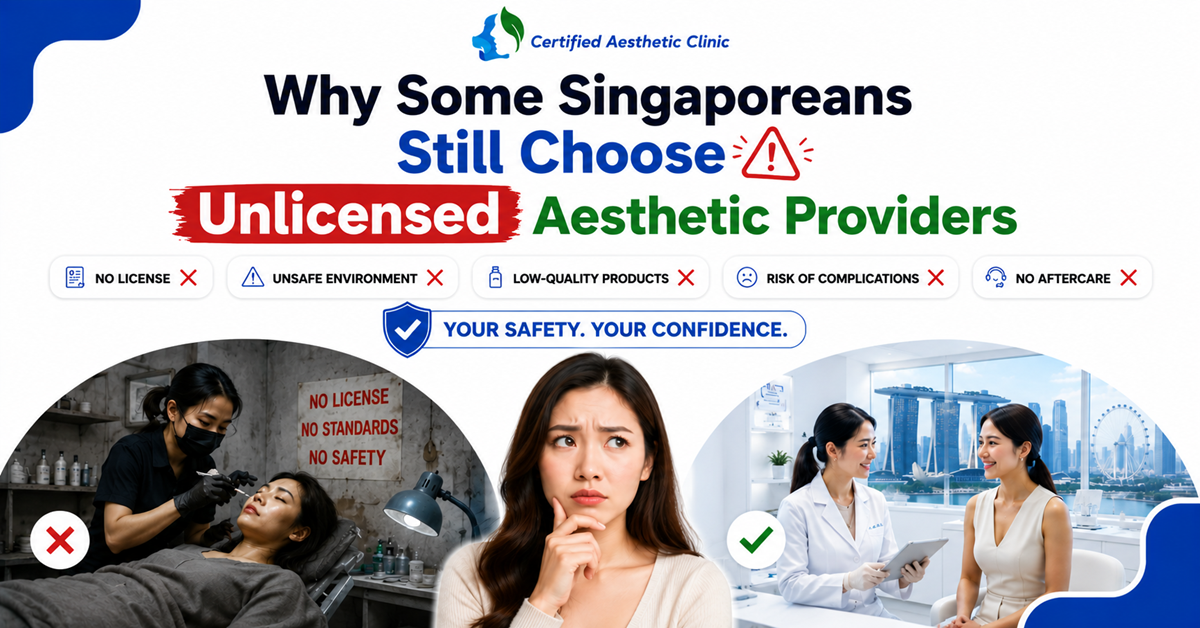
Nope, it's not okay to get Botox or other clinical aesthetic injections from a person who is not a licensed aesthetic clinic Singapore. Any procedure, whether it is Botox or fillers, thread lift or laser treatment, must only be done by a registered doctor or dentist in a licensed facility – a provider who is sourced from a home or Instagram is unlikely to be.
The Singapore Health Ministry has conducted dozens of investigations into unregistered people doing injections and laser treatments in their homes and via social media DMs. In 2020-2022 alone, MOH investigated approximately 60 such incidents, which is a significant increase from the 2 years prior.
Two-thirds have since been cleaned up, but fresh complaints continue to emerge, and consumer organisations have reported numerous burns, scarring and infections linked to these unregistered setups. It's not just a small problem affecting a few bad actors, but it's a trend that MOH will keep monitoring to see if the current penalties are sufficient to discourage it.
What the law actually says, why people still take the risk despite the law, and what happens when these treatments go wrong.
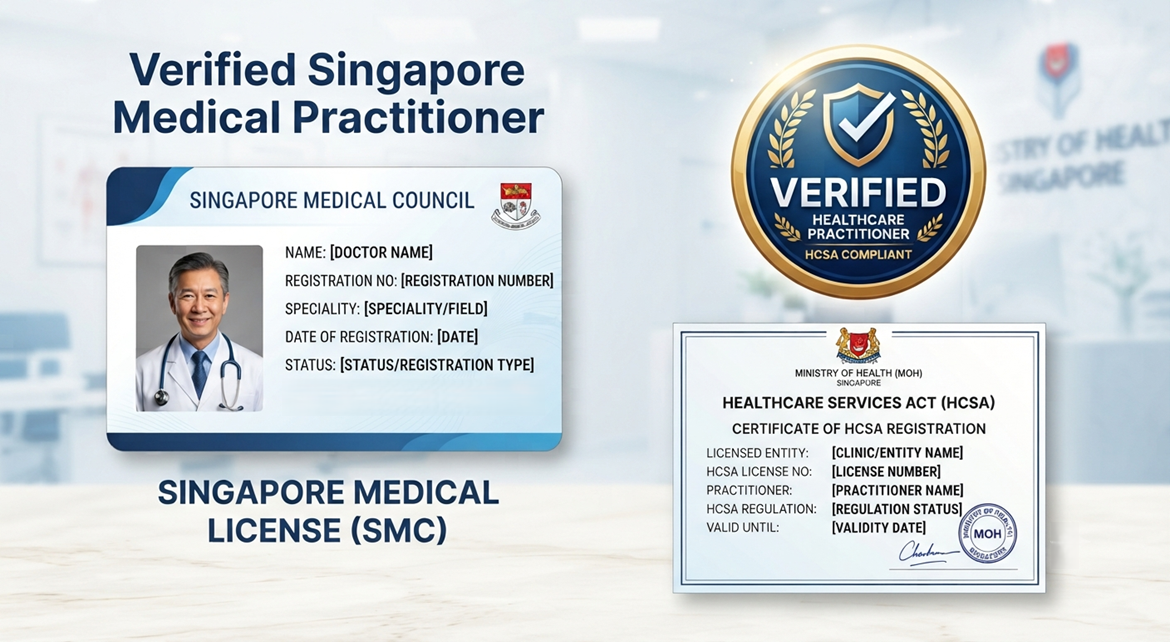
The Healthcare Services Act (HCSA) defines "clinical procedure," which includes most aesthetic procedures such as injectables, laser procedures, and minor surgical procedures, and requires that they be carried out by a registered doctor, dentist, or oral health therapist in a practice that has a valid HCSA licence.
No beauty salon, home practitioner or non-registered person is legally allowed to carry out these procedures, no matter how it is advertised. A provider that does so is liable to prosecution as an unlicensed healthcare service provider, with fines and/or jail time under the Act.
The difference is important since aesthetic treatments are not all-or-none solutions. Certain beauty salon services, like basic facials, non-invasive skin care and some massage therapies, simply do not fit into HCSA's licensing requirements and are legal to provide.
Many patients end up getting confused because the injectables, laser resurfacing, thread lift and other similarly "cosmetic" treatments sound the same on the surface but are treated differently under the law, of course, because they all can be harmful if not performed correctly, whether it be tissue damage, infection, nerve injury or worse.
MOH has made it clear that the purpose of this line is not to deal with paperwork for the sake of paperwork; it is just because of the clinical judgment that only trained and registered practitioners are expected to have.
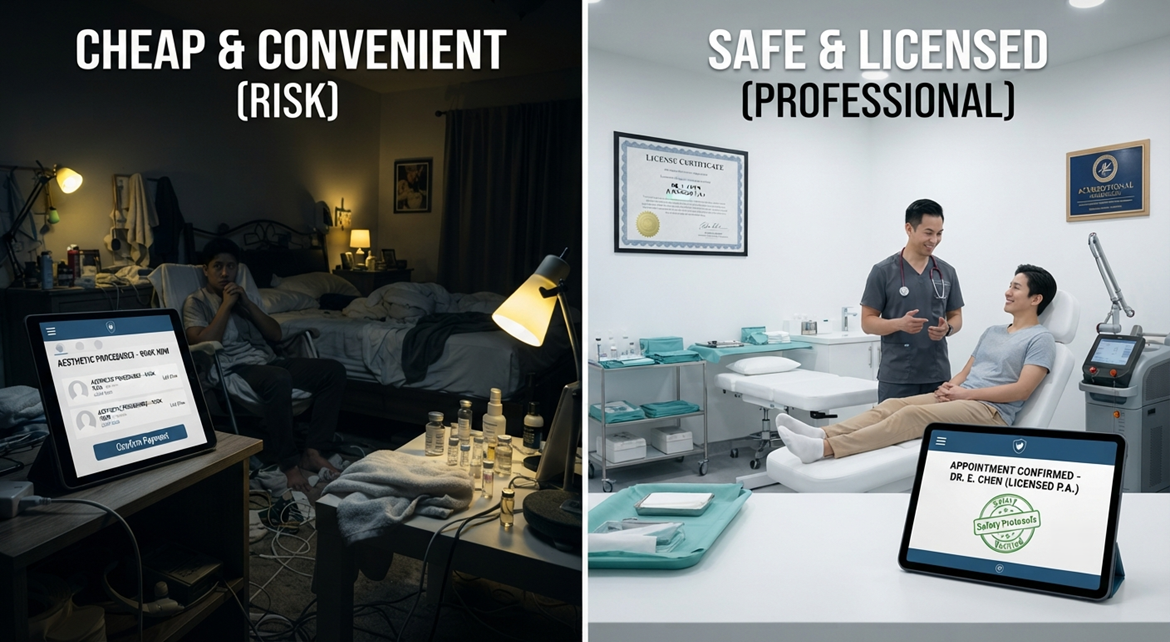
Everything is going to come down to the appeal of the price and convenience. The fees charged by home-based providers and social media sellers are regularly lower than what registered best aesthetic clinic Singapore patients would have to pay if they visited a clinic, as they do not incur the costs of employing doctors and having to pay for licenses and clinic spaces.
The convenience of booking via an Instagram DM, no waiting room, and the before and after pictures posted by patients' friends and influencers makes its appeal clear, particularly for those who are price conscious who perceive the treatment as low risk. What doesn't get mentioned in that pitch is that the “savings” are directly from reducing the safety standard that is in place for a reason.
There's also a dynamic of trust to deal with, and it's not a bad word to speak. A number of these providers grow their client base by word of mouth and social proof a friend who had it done and it was just fine, or a provider with thousands of followers and seemingly legit reviews.
That social validation can be more convincing than an official warning because they were a real person who didn't have any problems. The problem is, is that when there is a good outcome, it does not necessarily mean that there is no risk, but it is just that the complication has not occurred yet and when it does, there are usually negative consequences that fall on the patient.
The risk has been demonstrated in several cases in Singapore's courts. One case was a Malaysian who was sentenced to imprisonment and fined for practicing cosmetic surgery that are not authorized, such as double eye lifting and thread lifting, in a residential apartment.
In another case, a person who did not have a medical licence for their practice was again found guilty of such activities and sentenced to weeks in jail and a significant fine.
In the more serious scenario, a registered doctor was jailed after a patient died in the course of a beauty treatment that was botched, and the court took particular exception to his attempt to cover up the truth to the patient's family and to the paramedics, yet again, highlighting the importance of honesty and accountability during the process.
In addition to the criminal cases, the Consumers Association of Singapore has received reports of injuries such as burns, skin damage, scarring, swelling and infection after treatments by non-registered practitioners when compared to injuries in a licensed clinical environment which come with much stricter protocols in place to avoid them in the first place.
Unlicensed dental care in adjacent fields such as in hotel rooms or home units has also been noted by regulators, thus highlighting that this is not an aesthetic industry issue but a larger problem of unregistered individuals providing medical-adjacent services without proper regulation.
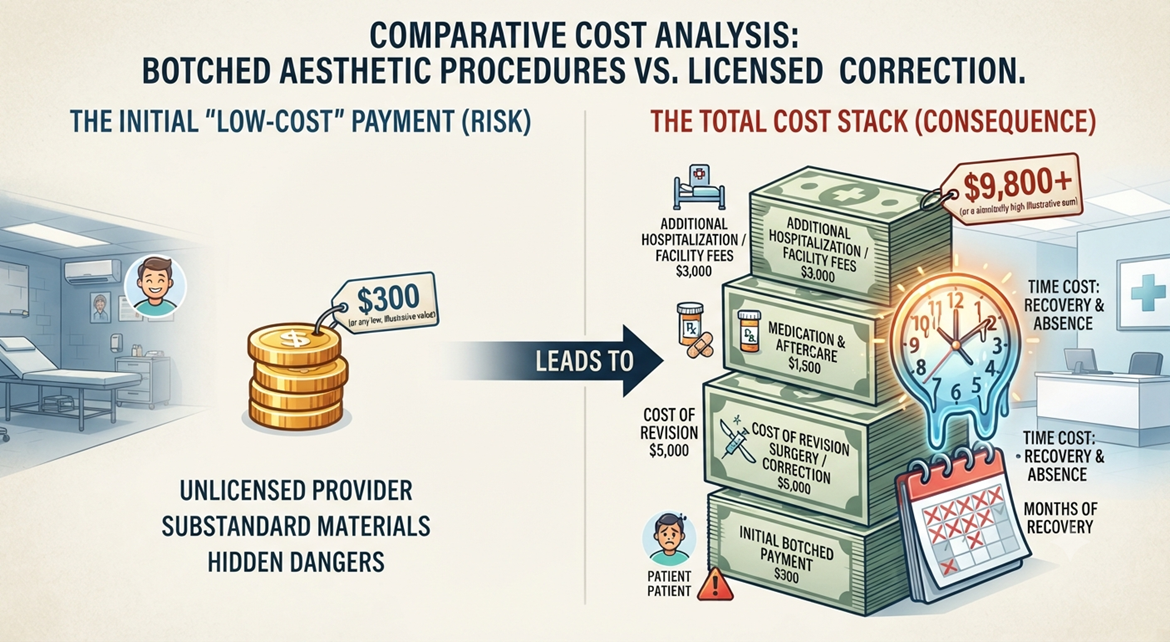
Financial logic seems to fail at the first sign of trouble in choosing an unlicensed provider. Poorly done fillers, injected sites that became infected or a botched thread lift can be more complex and thus more costly procedures to fix, requiring a registered doctor to evaluate, treat and sometimes correct the damage that was done, which is more complicated than the actual procedure was.
Patients often end up paying for the cheap treatment, the resulting complication and the correction, but without any remedy to complain and claim for compensation, because the provider was breaking the law in the first place.
There's a hidden expense, too: time. If you have a migrated filler or your product has failed, or if you have an infection, it is unlikely to be cured with just one office visit, as your treatment may require weeks or months of follow-up visits, monitoring, and in some cases, referrals to a specialist, especially if there is nerve damage or scarring.
The ease with which it seemed it would be done by the end of the week can turn it into a prolonged and much more costly process, plus the physical and emotional burden of having to live with a visible problem during the process.
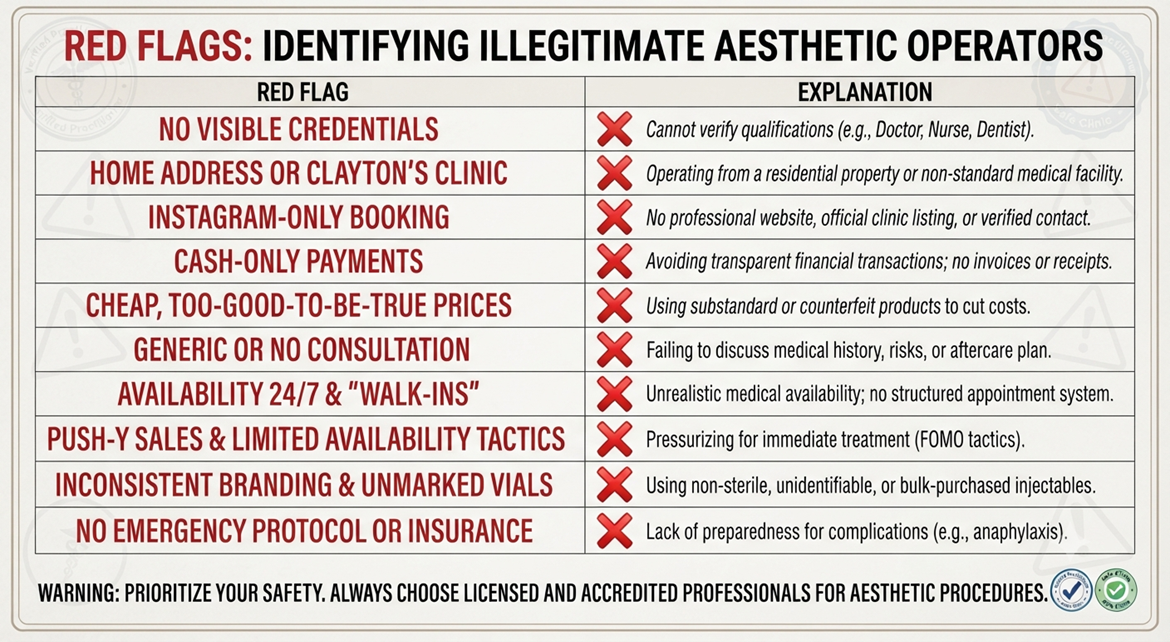
A few warning signs tend to show up consistently among unlicensed operators:
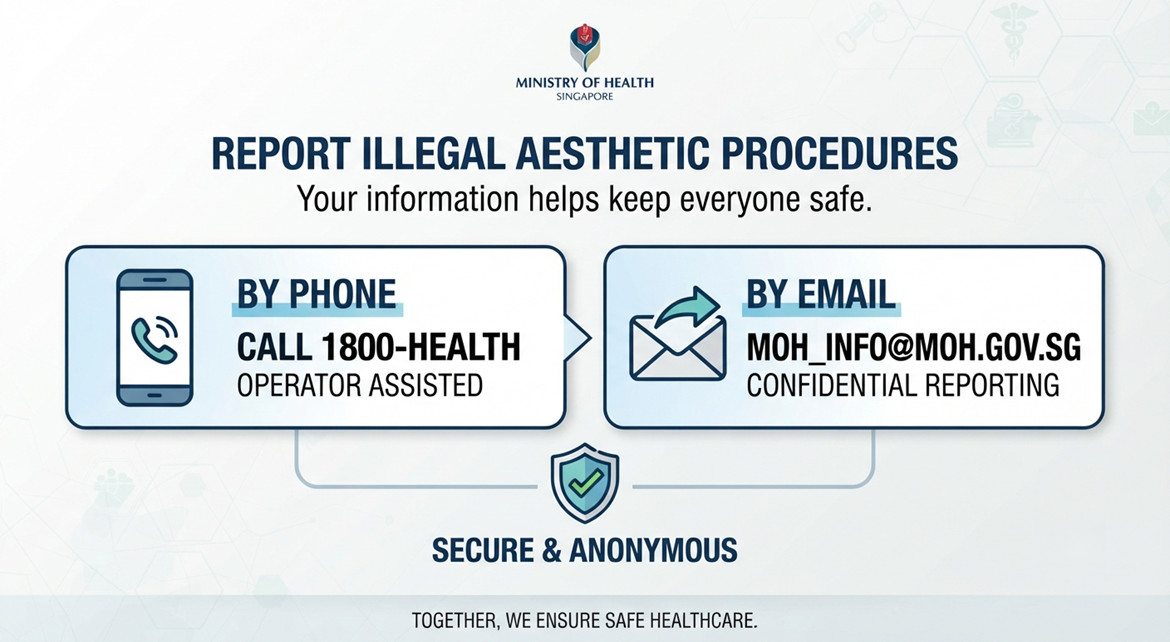
If you suspect a provider is operating without proper registration, you can report it directly to the Ministry of Health via email at MOH_QSM@moh.gov.sg or by calling+65 6325 9220.
The HealthHub Directory also includes information on healthcare practitioners and providers who have been found non-compliant, and the Watchlist allows you to check if a clinic is still licensed prior to booking an appointment.
You may also refer to the Singapore Medical Council's public register of the registered doctors to see whether a particular doctor has a valid practising certificate and whether he or she is registered.
As more and more people report on the provider, these cases are the ones that are discovered, so it really makes a difference if people flag the provider when they get a suspicious report.
If you have already been treated and had a complication, it may be useful to take screenshots of any ads, price lists, or DM messages prior to reporting so that MOH can get a better idea of what is going on and can assist you in your complaint.
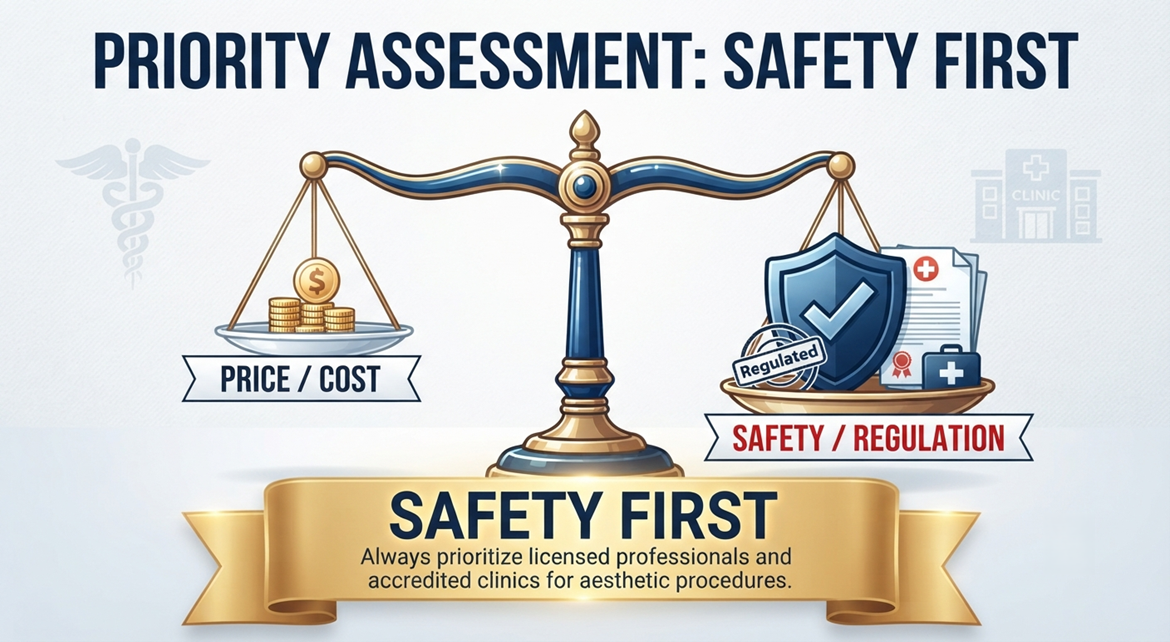
If someone offers a lower price at a licensed clinic, it may just as well be because of the differences in overheads, promotions or product choice, but if the price is dramatically lower than the market rate with vague answers about who performs treatment, this is a red flag to slow down and check and double-check.
Whichever provider you choose, it's best if you verify that they are a registered doctor or dentist and that they are working in a licensed facility, rather than if they have an attractive price on social media.
Also, ask specific questions before committing: who will be doing the procedure; what is being used; is the clinic licensed by the HCSA?
A proper provider will not hesitate to respond to such queries and should be quite happy to answer them, as it's one of the ways they gain a patient's trust in the first place.
If you are hesitant, if the provider deflects vaguely, or if the provider pressures you to book right away before “the promotion ends”, it's also a sign to hold off and check it out on your own.
The law in Singapore is unambiguous: clinical aesthetic procedures require a registered doctor or dentist working within a licensed facility, and the enforcement cases of the past few years show MOH is actively pursuing providers who ignore that. If you're looking for a transparent, MOH-licensed option, browse certified providers at the top aesthetic clinic in Singapore.
Copyright © 2026 Certified Aesthetic. All rights reserved.