
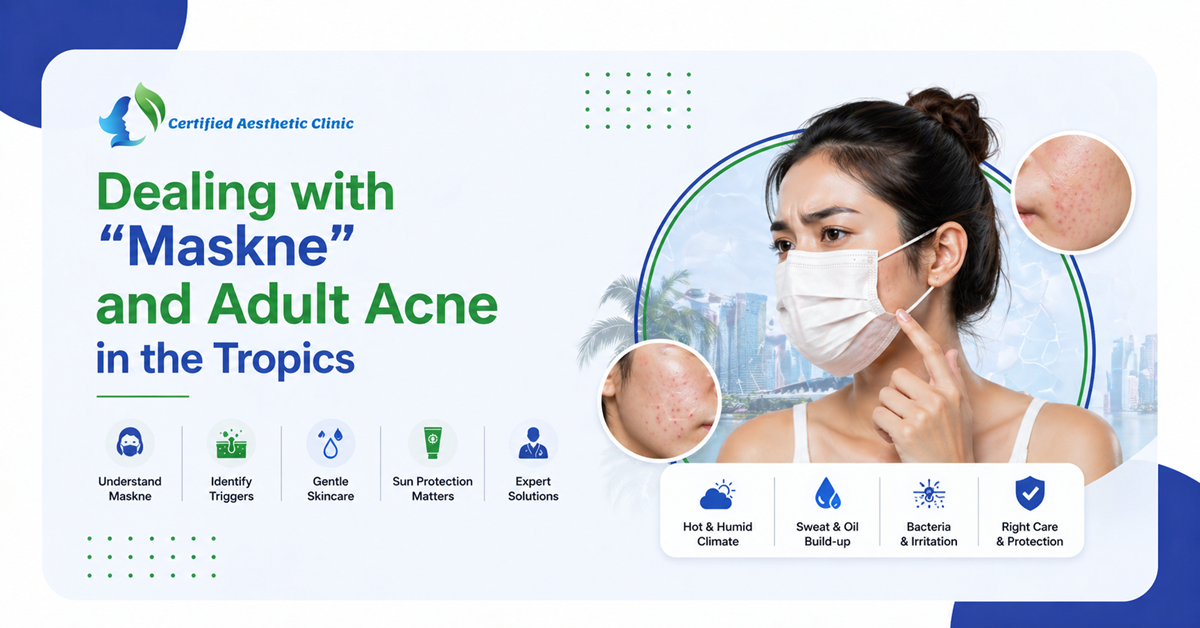
Living in a hot, wet place like Singapore brings many good things. But clear skin is not always one of them. The mix of heat, moisture, and wearing a mask every day has made breakouts very common. There are two skin issues: mask acne and adult pimples. The goal is to give honest and useful help without any sales talk. Finding the right adult acne treatment in Singapore starts with knowing how the local weather changes the skin in special ways.
Many grown-ups feel upset when pimples show up long after their teen years. Work stress, hormone changes, and the hot weather all play a part. This article explains why humidity makes skin worse, how face masks cause redness, and what steps really work. From home care to clinic visits, the focus stays on real fixes for real skin.
Singapore's humidity often goes above 80 per cent. This extra wetness stops sweat from drying. So oil and dirt get trapped inside the pores. Heat also wakes up the oil glands. They make more oil, which leads to clogging.
The warm, wet place lets bacteria grow quickly. These bacteria feed on extra oil and cause swelling under the skin. Make-up, sunscreen, or face masks lock in this wetness. Doctors call it "mask acne."
Here are the ways humidity hurts the skin:Sweat mixes with oil and dust. This blend blocks the pores. Breakouts show up on the forehead, cheeks, and chin.
The skin tries to protect itself from losing water. So it makes more oil. This creates a cycle of shine, then pimples.
Warm, damp spots let acne bacteria multiply fast. More bacteria means more swelling and bigger spots.
Wearing a mask for many hours creates a warm, wet space against the skin. This trapped wetness, plus rubbing from the cloth, leads to a special type of acne. Doctors call it "acne mechanica". The rubbing bothers the hair roots and causes small red bumps.
Many people see breakouts along the nose bridge, cheeks, and chin. That is where the mask sits tightly. The problem gets worse when sweat builds up under the mask. Changing masks often and washing the face after removal helps a lot. For those with ongoing maskne, the best facials for maskne in Singapore offer deep pore cleansing that daily washing cannot achieve.
| Trigger | How It Hurts Skin | Simple Fix |
Heavy sunscreen or make-up |
Makes a thick layer that traps heat and bacteria |
Switch to light, non-clogging SPF |
Face masks (worn long) |
Creates warmth and rubbing that leads to "maskne" |
Change masks often and wash gently after |
Sweat after gym |
Mixes with oil and dead skin cells |
Rinse face or use a wet wipe right away |
Learning how to get rid of maskne means changing daily habits. Using a gentle cleaner twice a day removes buildup without hurting the skin. Dabbing extra oil at midday with a clean tissue also helps. But alcohol toners make things worse. They dry out the skin's shield.
Also Read:Men’s Aesthetics in Singapore: Jawline Sculpting & Hair Restoration
A beneficial routine for humid weather focuses on balance. Not strong products. Over-cleansing or using harsh toners strips the skin. Then the skin makes even more oil to catch up. Gentle, steady care gives better results over time.
Here are the key steps for a weather-smart routine:Scrubbing once or twice a week with a chemical exfoliant helps keep pores clear. Physical scrubs with tiny bits cause small tears. They also worsen swelling. So it is best to skip them. Many acne clinics in Singapore suggest chemical peels once a month. Peels remove dead skin cells and stop clogged pores.
Small daily choices can quietly cause breakouts. People remain ignorant about these essential facts they need to know. People touch their faces throughout the day, which leads to bacteria spreading on their phones, hands, and mask straps. People who sleep on unclean pillowcases will spread their existing skin oils and dead skin cells back onto their fresh pores. The effectiveness of your skin care products will decrease when you continue using these harmful habits.
Here are the common habits that make acne worse:Professional help becomes needed when home care stops working. A doctor can tell whether hormones, bacteria, or masks cause the breakouts. Then the doctor makes a custom plan. It may include prescription creams, pills, or clinic procedures.
Medical treatments target acne at its source. Not just the top layer. Choices range from cream retinoids to laser therapies. The right approach depends on the type of acne and how severe it is.
Here is what happens during a clinic visit:Some clinics focus on active acne care using proven methods. These experts know that tropical skin care for acne needs different plans than cool, dry places. They also offer chemical peels, laser therapy, and energy treatments. These help both active breakouts and leftover marks.
Many people want acne to go away overnight. So they grab strong products. But these harsh fixes often strip the skin. Or they hide the real problem. Knowing why common shortcuts fail saves time, money, and worry.
Many people use harsh cleaners and alcohol toners to dry out pimples. These products strip away the skin's natural shield. Once that shield weakens, moisture escapes. Redness starts. The skin then panics and makes even more oil. This cycle leaves the face red, flaky, and still broken out.
Squeezing a spot might feel pleasurable. But it pushes bacteria deeper into the skin. This hurts the follicle wall. It spreads infection to nearby pores. The result is a bigger, angrier bump. It takes weeks to heal. Popping also makes wounds that turn into dark marks or permanent pits. Letting a doctor handle removal keeps the skin safe.
Spot treatments can shrink a single pimple. However, they overlook the broader context. Acne forms under the skin over days or weeks. Then it shows up on top. A dab of cream will not stop new breakouts from forming elsewhere. Real clearing means treating the whole face steadily. Not just aiming at one spot after it shows up.
Some people swap medicated creams for coconut oil or essential oils. These natural products feel gentle. But many contain heavy ingredients that block pores. Coconut oil scores high on the clogging scale. It blocks follicles easily. What works for dry skin on the body can cause chaos on an acne-prone face. Stick with products labelled non-clogging.
Home remedies and store products have limits. When acne turns severe, medical treatments work better. They target the root causes that creams cannot reach. A visit to a trained doctor provides access to more potent and reliable options. Medical-grade acne treatments for sensitive skin are specially made to work without causing extra redness or stinging.
Prescription retinoids speed up how quickly skin cells renew. This stops dead cells from sticking together. So they do not block pores. Retinoids also lower swelling. They help other acne creams work better. Results take about twelve weeks of nightly use. Redness and peeling happen at first. But the skin adjusts over time.
Antibiotics calm deep, painful lumps. Topical creams cannot reach these lumps. A short course of eight to twelve weeks knocks down active breakouts. Doctors always pair antibiotics with another cream. This stops bacterial resistance. For hormone-related acne in women, other pills offer a different path. These choices treat the root cause inside the body.
A special laser uses a specific light wave. It heats and quiets overactive oil glands. The process takes thirty minutes. There is no downtime. Three sessions spaced one month apart give the best results. Studies show that 78 per cent of patients see at least half their acne fade within three months. This choice works well for those who cannot take pills.
In-clinic peels use higher acid amounts than home products. A doctor puts on salicylic or glycolic acid. This scrubs deep layers and unclogs pores. The peel stays on for a few minutes. Then the doctor washes it off. Mild flaking follows for two to three days. Monthly peels keep pores clear. They cut down surface breakouts without harsh daily scrubbing.
Dealing with masks and adult acne in the tropics requires patience. It also needs the right plan. Humidity and mask-wearing create ongoing problems. But the skin can get better with steady care. Knowing how the local weather affects the skin is the first step.
A gentle, balanced routine builds the base. Wash without stripping. Hydrate without clogging. Protect with oil-free sunscreen every single day. When breakouts stay even with effective home care, asking for professional help makes sense. Adult acne treatment in Singapore has grown a lot. Many proven choices exist.
The choice to visit a clinic should stem from self-care. Not shame. Acne is a medical issue. Not a personal flaw. With the right help and a bit of patience, clearer skin is truly possible. Tropical skin care for acne does not have to be hard. It just needs to be smart.