
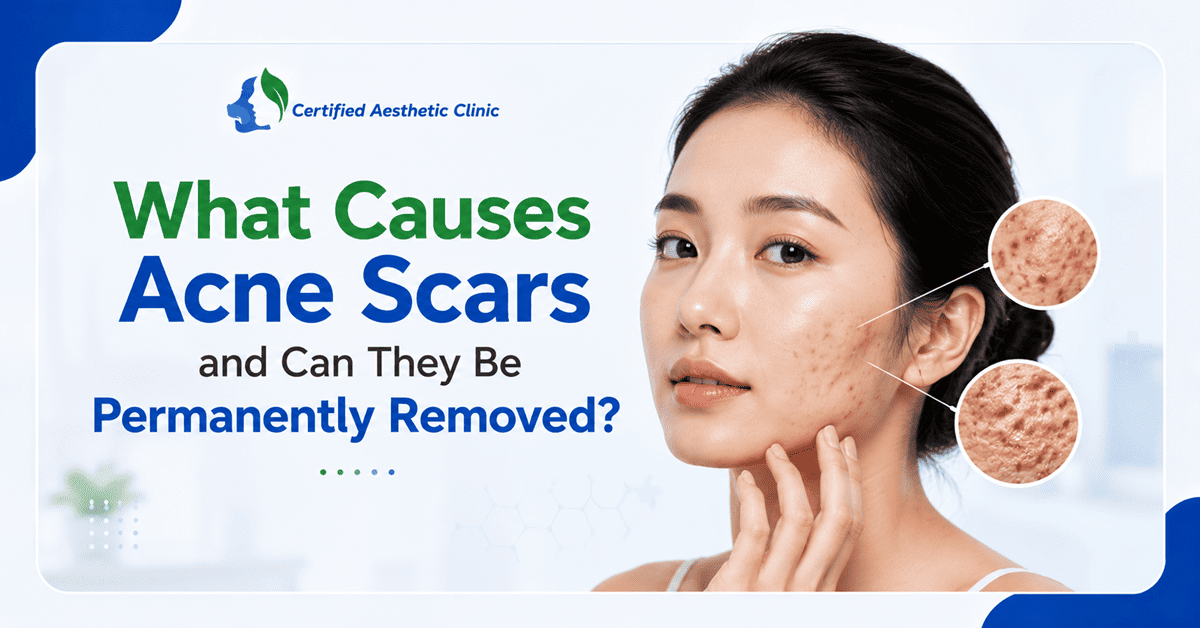
Yes, acne scars can be treated and significantly improved, but whether they can be permanently removed depends on the type, depth and severity of the scar. Modern acne scar treatment in Singapore can reduce most scars by stimulating collagen production, resurfacing the skin or releasing scar tissue. While complete removal is not always possible, many people achieve smoother skin and long-lasting results with the right treatment plan.
The good news is that acne scars are no longer something you simply have to live with. Modern acne scar treatment offers a range of options that can improve the appearance of scars and, in many cases, make them far less noticeable. However, not all scars are the same, and not every treatment works for every person.
If you have been wondering why acne scars form, whether they can be removed permanently, and which treatments are worth considering at an aesthetic clinic in Singapore, this guide explains everything you need to know.
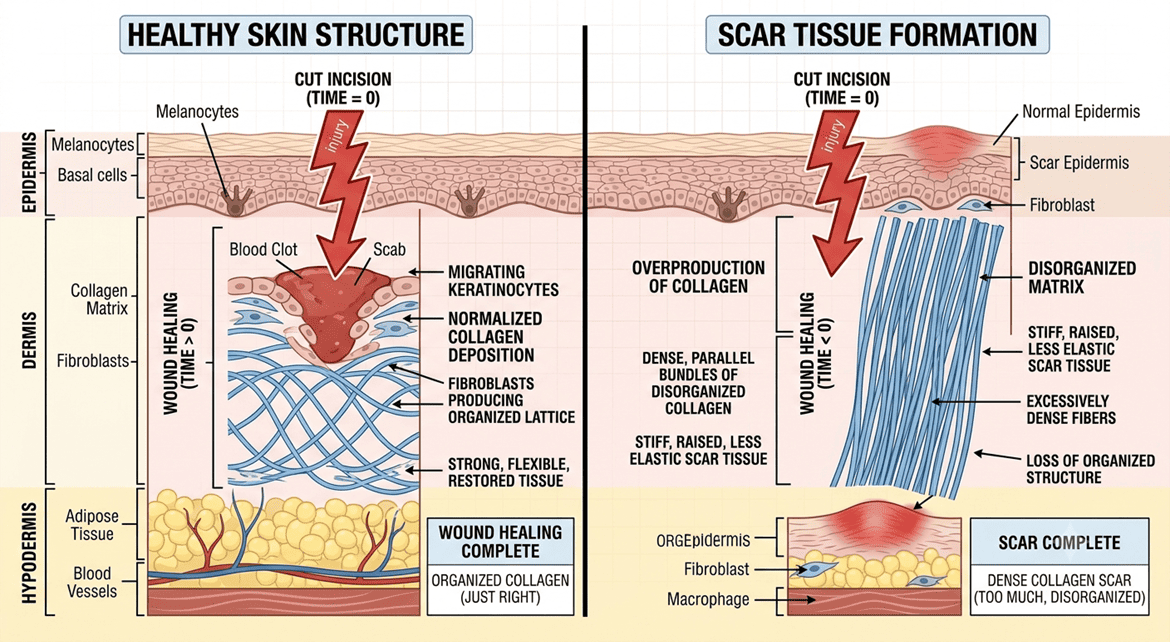
The formation of acne scars happens when acne inflammation creates damage to the skin’s fundamental tissue structure.
The blockage of pores happens when oil, dead skin cells and bacteria accumulate inside them which leads to swelling and inflammation. The skin recovers completely from minor injuries that do not produce any permanent marks. The skin experiences extended inflammation which reaches its deeper layers to destroy both collagen and the tissues that surround it.
Collagen functions as the main protein that maintains skin surface smoothness and provides skin firmness and structural support. The body activates its healing system to fix collagen after it sustains any form of injury. The human body fails to reach its ideal state during the healing process.
The situation leads to two different potential results:
The skin develops a depression when it fails to generate enough collagen during the healing process. The skin develops atrophic scars which show up as depressed areas that create pitted or sunken scars.
The skin creates too much collagen which results in the formation of raised scar tissue on the skin surface. The body forms two types of scars which medical professionals call hypertrophic scars and keloids.
Multiple elements exist that raise the possibility of developing acne scars, which are:
The skin shows damage because it experiences repeated physical injuries.
The body starts to develop permanent scars when acne treatments do not begin during the early stages of acne development.
Also Read Blog: Hair Transplant in Singapore: FUE vs FUT — Which Method Fits You?
Understanding the types of acne scars is important because each type responds differently to treatment.
| Type | Appearance | Cause | Treatable? |
| Ice Pick | Deep, narrow holes in the skin | Severe inflammatory acne | Yes |
| Boxcar | Wide depressions with defined edges | Inflammatory acne | Yes |
| Rolling | Wave-like uneven texture | Fibrous bands beneath the skin | Yes |
| Hypertrophic/Keloid | Raised, thickened scars | Excess collagen production | Yes |
Ice pick scars are narrow but deep. They resemble tiny puncture marks and often extend deep into the skin.
These scars usually develop after severe cystic acne. Because of their depth, they are among the most challenging scars to treat.
Suitable treatments may include:
Boxcar scars show up as wide indentations that maintain their original shape with distinct boundary lines. They can be shallow or deep.
The development of these scars happens because skin tissue loses its collagen structure during an inflammatory reaction.
The patients respond effectively to treatment methods that generate new collagen in their bodies.
The skin develops a wavy pattern because of rolling scars that form on its surface.
The skin develops these conditions because fibrous tissue creates bands that move the upper skin layer downwards. The surface shows irregular patterns which become more apparent when specific light angles strike it.
The treatment process starts by freeing these fibrous connections before medical professionals perform skin resurfacing procedures.
These scars appear raised above the skin surface.
The body creates these marks through excess collagen production which takes place during tissue healing.
The development of hypertrophic scars stays limited to the original acne spot but keloid scars spread past their initial boundaries.
Also Read Blog: Is Mole Removal in Singapore Painful? What to Expect Before, During and After
The treatment of acne scars leads to major improvement but their total and permanent elimination depends on the specific characteristics of each scar including its type and depth and how severe it is. The right medical care leads most patients to experience between 70 and 90 percent improvement in their condition.
Shallow scars tend to fade into almost invisible marks yet deep scars need multiple treatment sessions and patients should maintain realistic expectations. Patients need to reach their skin improvement targets which exceed basic acne scar elimination, during their treatment process.
The phrase acne scar removal permanent needs to be understood at the right level because people tend to misunderstand it. Medical interventions produce enduring results that differ from person to person.
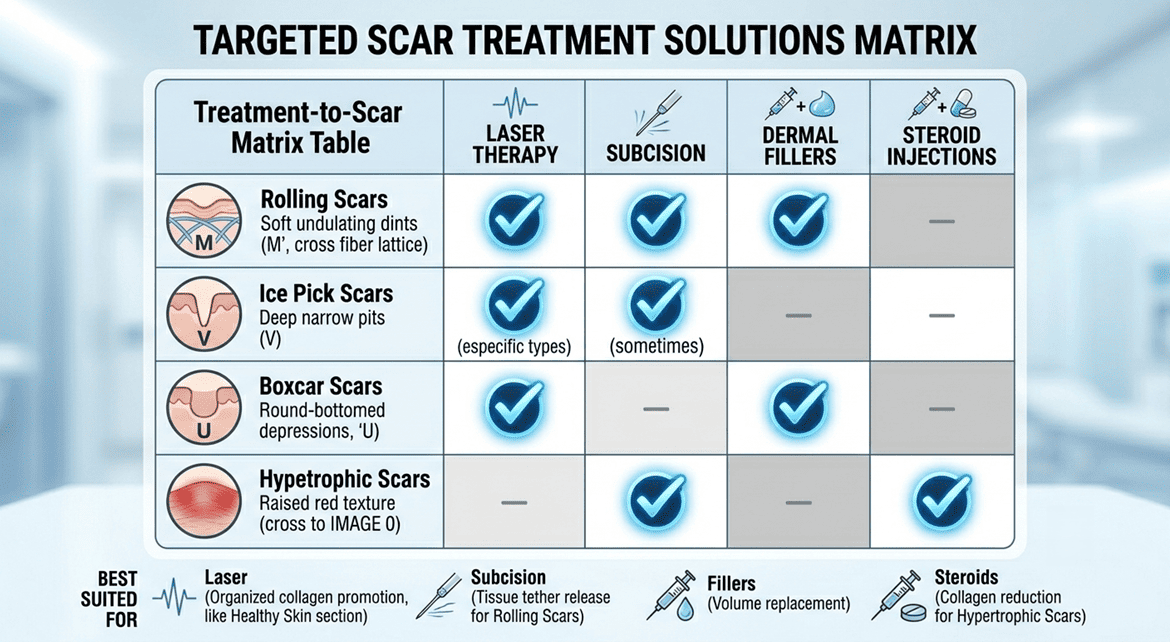
There is no single treatment that works for all scars. The most effective approach depends on the specific scar type.
This technique involves placing a concentrated acid directly into the scar. The controlled injury stimulates collagen production and helps reduce the depth of the scar over time.
Laser treatments can improve skin texture and encourage collagen remodelling. Many patients achieve better results when laser treatments are combined with TCA CROSS.
Tiny needles create controlled micro-injuries in the skin while delivering radiofrequency energy into deeper layers. This stimulates collagen production and helps smooth depressed scars.
Laser resurfacing can improve the appearance of boxcar scars by promoting new collagen formation and skin renewal.
Subcision is often considered one of the most effective treatments for rolling scars. A specialised needle is used beneath the skin to release the fibrous bands pulling the skin downward.
Fillers may be used to restore lost volume and support the skin from beneath.
Certain injectable treatments may support collagen production and skin repair following subcision.
The production of extra collagen is controlled by steroids which leads to the reduction of raised scars.
The medical procedures work to reduce scar tissue density while improving skin surface appearance. The best results come from using multiple treatment approaches together.
The best acne scar removal in Singapore becomes available through customized treatment strategies that handle different scar types together.
One of the most common questions patients ask is how quickly they can expect results.
The answer depends on:
For mild scars, visible improvements may appear after a few sessions.
For moderate scars, many patients require:
Severe scars may require longer treatment plans.
Collagen remodelling continues for several months after each session, which means improvements often develop gradually.
Patience is important when undergoing acne scar treatment in Singapore. Significant changes rarely happen after a single treatment.
Unlike acne itself, acne scars generally do not disappear on their own.
Pitted scars represent a structural loss of collagen. Once that tissue has been lost, the skin cannot fully replace it naturally.
Raised scars also tend to persist because excess scar tissue remains in place.
Without treatment:
Sun exposure can also increase pigmentation and make scars stand out more.
Early intervention often produces better results because newer scars tend to respond more readily to treatment than older, mature scars.
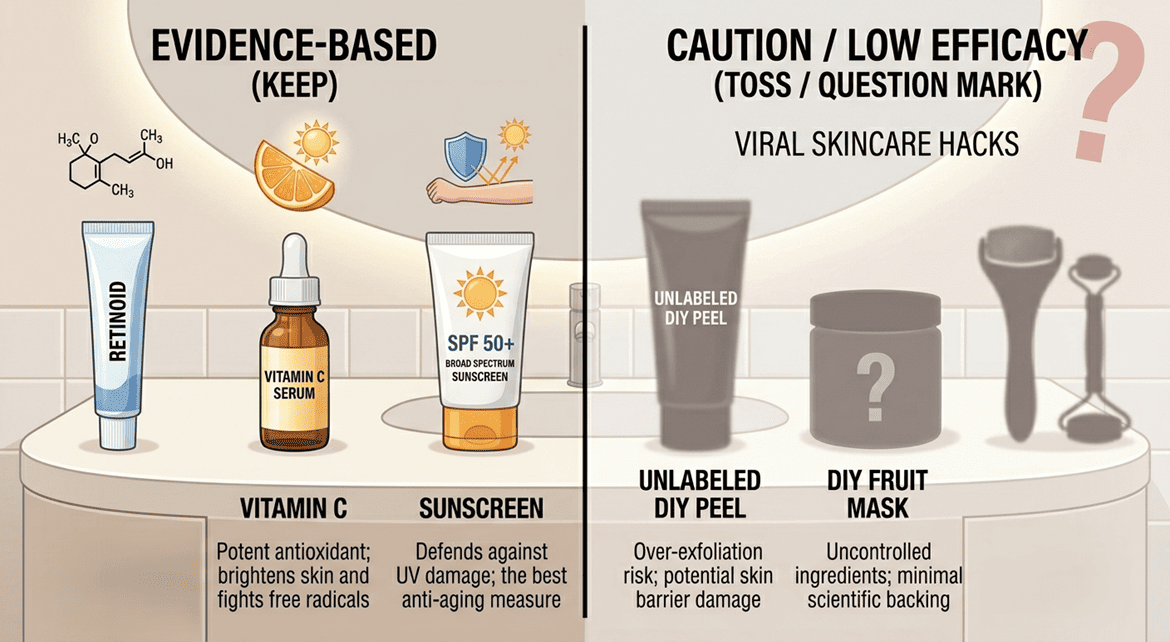
Many people try home remedies before seeking professional treatment.
While some products can improve skin appearance, it is important to understand their limitations.
Retinoids encourage skin cell turnover and support collagen production. They may help improve mild textural changes and support overall skin health.
Vitamin C can help fade post-inflammatory pigmentation and support collagen formation.
Daily sun protection is essential. Ultraviolet exposure can darken marks and increase contrast between scars and surrounding skin.
Many products claim to erase scars.
Examples include:
These approaches do not rebuild lost collagen and may irritate the skin. For true structural scars, professional treatment remains the most effective option.
Treatment costs vary depending on the technology used, the severity of the scars, and the number of sessions required.
Typical price ranges include:
| Treatment | Estimated Cost Per Session |
| Pico Laser | $200–$800 |
| RF Microneedling | $400–$1,200 |
| Subcision | $300–$600 |
Most patients require multiple sessions to achieve meaningful results.
When comparing treatment providers, it is important to consider:
You can compare clinics specialising in acne scar removal at the best acne scar removal clinics in Singapore.
If you are also evaluating options for general skin concerns, you may wish to explore providers listed under aesthetic clinic Singapore to compare available services and expertise.
Choosing the right aesthetic clinic in Singapore can make a significant difference because successful treatment often depends on combining the right techniques for your specific scar pattern.

Not every clinic approaches acne scar treatment in Singapore in the same way. Some focus mainly on laser treatments, while others offer a broader range of procedures. When selecting an aesthetic clinic in Singapore, consider asking:
A detailed assessment should always come before treatment recommendations.
Since many people have a mix of scar types, a customised plan often delivers better results than relying on a single treatment method.
Also Read Blog: Aesthetic Clinic in Singapore: What Modern Patients Should Know Before Choosing One
The skin develops acne scars because the body creates scar tissue when inflammation damages the collagen structure and prevents proper wound healing. The formation of scars depends on skin healing patterns which result in either deep pits or wide depressions or rolling surface textures or elevated thickened skin tissue.
The good news about modern medical techniques is that they help reduce the severity of most scar formations. The process of complete acne scar removal does not produce permanent results for every patient but most individuals can achieve better skin texture through appropriate treatment methods.
Doctors need to recognise different types of acne scars before they can create an effective treatment plan for their patients. The best results come from early treatment of laser therapy, microneedling, and subcision and combination therapies when patients understand what to expect.
Doctors can help people with stubborn acne scars by performing professional skin assessments which lead to customised treatment plans that improve their skin condition and build their self-esteem.
Copyright © 2026 Certified Aesthetic. All rights reserved.