
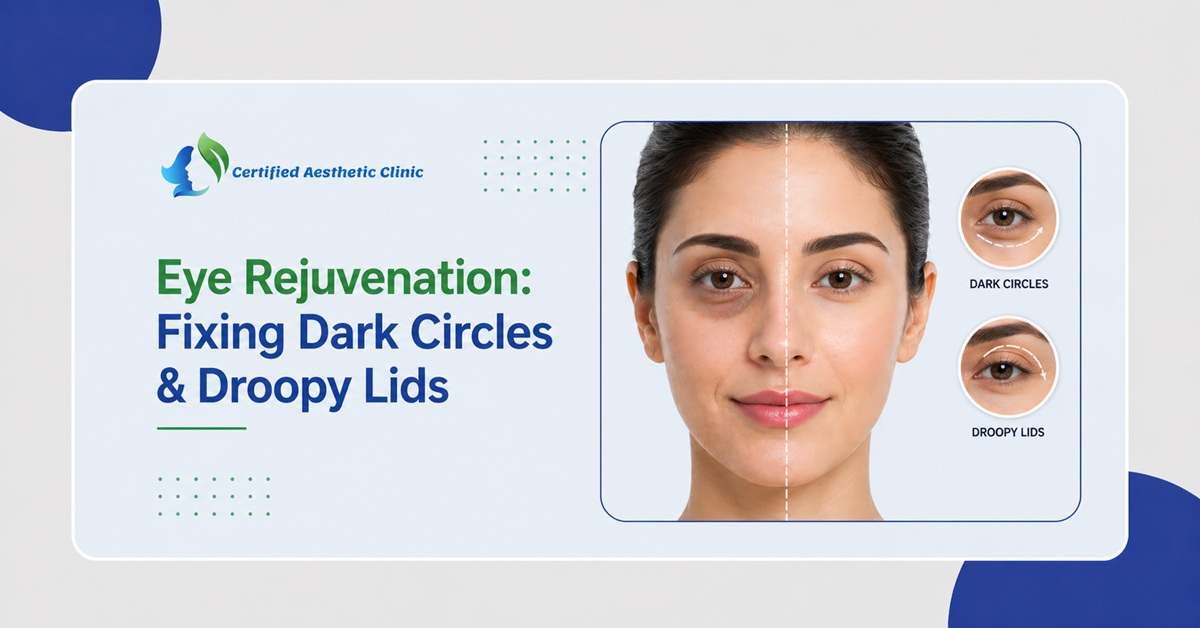
Do you look in the mirror and see tired eyes looking back, even after sleeping all night? Dark shadows and droopy lids can make anyone feel upset. The positive news is that you do not have to keep that look forever. New treatments can remove under-eye circles and lift sagging skin without a long recovery. This guide explains the process of eye rejuvenation in Singapore in straightforward, easy-to-understand language. You will learn exactly which choice fits your needs, whether you want a quick fix or a lasting change.
The secret to fixing tired eyes is matching the right treatment to the real problem. Hollow shadows need filler to add fullness. Loose lids need laser energy to tighten. Dark circles from blood vessels need special light therapy.
The local lifestyle contributes significantly to the ageing of the eye area. Air-conditioned offices dry out the thin skin around the eyes. Constant screen time strains the muscles that keep lids lifted. Many people also carry genes that lead to hollow under-eyes or puffy bags.
Here are the reasons why eye tiredness shows up so clearly:
Also Read: The "Glass Skin" Guide: SkinBoosters vs. SkinVive
Dark circles develop through various causes, which differ from person to person. The skin develops dark areas because increased pigment production causes melanin to build up. The purple-blue blood vessels become visible through the thin skin, creating these skin changes. Deep hollows in the third type produce shadows which appear on every skin tone.
A proper dark circle removal treatment starts with finding the root cause. Pigmented circles improve with brightening creams containing vitamin C or kojic acid. Vascular circles benefit from laser treatments that seal off leaky blood vessels. Hollow tear troughs need volume restoration through injectable fillers or fat transfer.
Here are the signs that help identify the type of dark circles:
Once a person knows their dark circle type, picking the right treatment becomes much easier. A doctor can confirm the finding during a quick skin check. Using several approaches together often gives the best results for mixed-type dark circles.
The skin of the upper eyelids starts to droop when its natural flexibility disappears or when the muscle responsible for elevation becomes weak. Some individuals develop additional fat deposits, which force their eyelids to descend. The old-fashioned surgical technique involved removing skin tissue while surgeons worked to strengthen the underlying muscle structure. The medical field now offers non-surgical treatment methods that have become available after the traditional surgical approaches.
Non-surgical blepharoplasty uses energy-based tools to tighten loose skin without cuts. Radio waves and laser treatments heat the deep layers of the eyelid. This triggers collagen to shrink and new fibres to grow. The result lifts the brow a bit and reduces hooding over the eye.
The popular tool, Fotona SmoothEye, sends a laser pulse inside the lower eyelid. This sparks collagen production without touching the outer skin. Another option, Rejuran I, injects a DNA-rich fluid that fixes damaged tissue and thickens the under-eye area. Both treatments need several sessions spaced a few weeks apart.
Also Read: The 2026 Price Guide: Aesthetic Treatment Costs in Singapore
Here are the differences between surgery and non-surgical options:
Picking between these paths depends on how bad the droopiness is and a person's comfort with recovery time. A full consultation helps match the right option to each person's unique features.
Hollow under-eyes create a sunken look that makes a person appear exhausted. This volume loss happens naturally with age as fat pads shrink and bone wears down. Under-eye fillers in Singapore offer a quick fix by injecting hyaluronic acid into the tear trough area.
The process takes about twenty minutes. A doctor uses a thin needle or tube to place filler along the bony rim beneath the eye. This lifts the skin and fills the hollow. It removes the shadow that looks like a dark circle. Results show up right away, though some swelling may hide the final look for a few days.
For those comparing technologies, the Fotona SmoothEye vs eye fillers question often comes down to the specific issue. Fotona works best for skin tightening and mild looseness. Fillers do better at replacing lost volume and smoothing out deep hollows. Some people gain from using both approaches together.
Here are the things to know before getting under-eye fillers:
A good injector explains all these points during the meeting. They also show before and after photos of past patients. This openness builds trust and sets real hopes for the outcome.
People who enter an eye treatment clinic for the first time must handle their initial fear. The complete understanding of each stage helps people overcome their fear about what will occur next. This section presents a complete overview which starts with the initial doctor discussion and proceeds until the last scheduled check-up. People who master the process will achieve self-assurance because they recognise what will happen next in their experience.
A good doctor starts by listening to worries and looking at the eye area. They pull out a bright light to check skin thickness, volume loss, and muscle strength. They also ask about past treatments and any health issues. This meeting lasts about twenty minutes and sets honest hopes. No trusted doctor moves forward without this full check first.
Most eye procedures cause only mild discomfort, but numbing makes the experience easier. The doctor puts a thick cream on the skin around the eyes for twenty minutes before shots. For laser treatments, a cooling gel protects the surface while the tool works. Surgery of the eyelids needs local numbing shots that pinch briefly, then numb fully.
Time needed varies by treatment type. Laser sessions like Fotona SmoothEye finish in fifteen to twenty minutes. Under-eye filler shots take about thirty minutes from numbing to final check. Eyelid surgery lasts one to two hours. This depends on whether the doctor treats both upper and lower lids. Most people book non-surgery appointments during a lunch break.
Non-surgical treatments need almost no recovery time. Mild swelling or redness fades within a few hours. Fillers cause puffiness for two to three days, but makeup hides most of it. Surgery recovery involves seven days of bruising and swelling, then another week before looking normal. Stitches dissolve or get removed at the one-week follow-up visit.
No beauty procedure gives perfection without possible downsides. Eye rejuvenation in Singapore has improved a lot, but patients deserve to know what can go wrong. Openness builds trust and stops disappointment.
Here are the risks tied to different treatments:
The best treatment for hollow under-eyes depends on each person's unique features. Fillers work well for volume loss, but do not tighten loose skin. Lasers tighten skin but do not fill deep hollows. Fotona SmoothEye improves texture and mild looseness but cannot replace lost fat pads. An honest doctor explains these limits before any procedure begins.
Dealing with tired, aged eyes does not mean giving up. Modern medicine offers several paths to a brighter, more rested look. The right choice depends on the specific issue: volume loss, skin looseness, pigment, or a mix of factors.
A meeting with a skilled doctor gives the clearest road map. They check the eye area, discuss goals, and suggest treatments based on proof, not sales targets. Starting with a careful approach, like laser or skin creams, makes sense for mild issues. More advanced problems may need fillers or surgery.
The choice to try eye rejuvenation in Singapore remains personal. No outside pressure should push it. For many people, however, looking in the mirror and seeing bright, awake eyes instead of worn ones gives a daily confidence lift. That feeling holds real value.
Copyright © 2026 Certified Aesthetic. All rights reserved.