
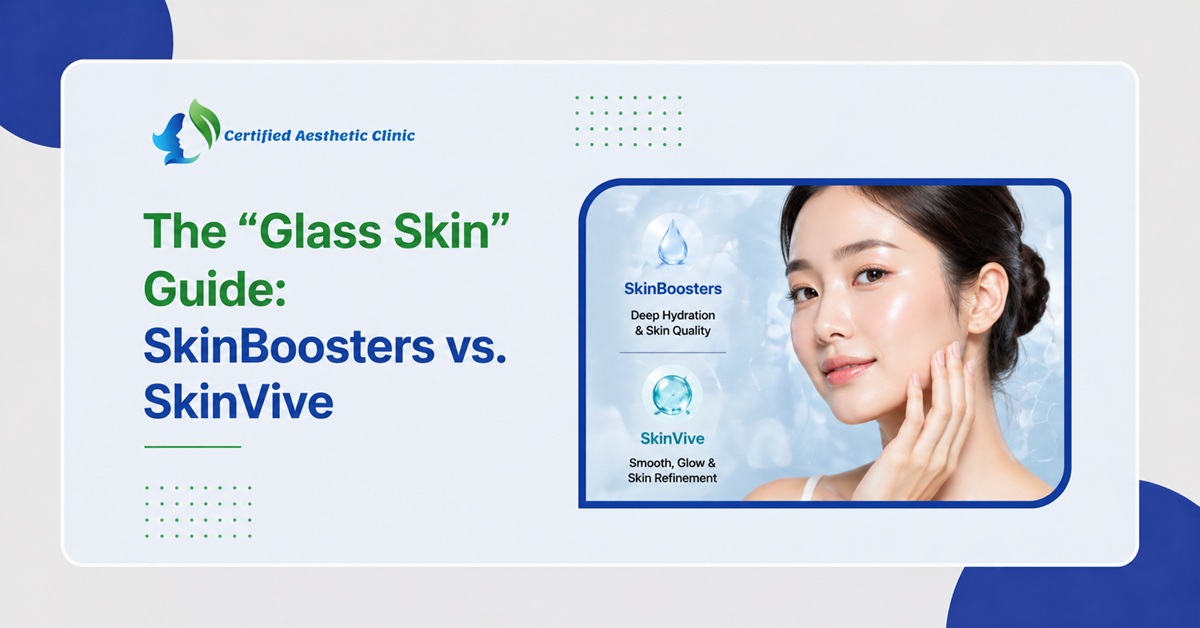
Have you ever looked in the mirror and wished your face had that shiny, see-through glow like a clean window? You are not alone. Many people in Singapore dream of achieving that perfect "glass skin" look. Hot, sticky weather and constant air conditioning make it hard to keep skin hydrated and bright. This guide compares two popular injectable treatments that promise deep moisture and a radiant complexion. Knowing about glass skin treatment in Singapore helps a person pick the right option for their skin type and budget.
Living in a tropical climate can make it challenging to keep your skin hydrated. Air conditioning removes moisture from the air, and changes in humidity can upset the skin's balance. The following sections will explain how SkinBoosters and SkinVive work. They also show why regular medi-facials are essential for locking in that dewy, luminous finish all year.
Creams and serums only go so deep into the skin. They wet the outer layer but rarely reach the deeper skin where true Hydration starts. Injectable treatments resolve this problem by putting hyaluronic acid right where the skin needs it most. This way creates lasting plumpness and a natural shine that no cream alone can match.
Hydrating injectables in Singapore have grown very popular for several practical reasons. The weather always pulls moisture from the face. This makes surface-level Hydration feel useless after a few hours. Injectables function by binding water to skin cells for extended periods, ranging from weeks to months. They also stimulate collagen production, which makes the texture and stretch better over time.
Here are the signs that a person might gain from Hydration injectables:Both treatments use hyaluronic acid, but they give it in different ways. SkinBoosters vs SkinVive comes down to injection depth, particle size, and how the product spreads once inside the skin. Knowing these differences helps a person pick the option that fits their unique skin needs.
SkinBoosters use a stable hyaluronic acid formula that stays where the doctor puts it. The product makes small Hydration stores that slowly release over several months. This way works well for aiming at specific dry spots or areas with clear texture issues.
SkinVive uses a more watery formula that spreads evenly across a wider area. The product moves through the skin, making a uniform layer of Hydration. This way suits people who want overall brightness rather than spot-fixing. The 2026 love for SkinVive comes from its skill to make that smooth, lit-from-within glow.
Here is a simple table to see the differences:| Feature | SkinBoosters | SkinVive |
Formula feel |
Thicker, stable gel |
Thin, watery mix |
Injection depth |
Middle skin |
Top skin |
Spread pattern |
Small wet spots |
Even spread |
Best for |
Aimed at dryness or texture |
Overall glow and shine |
Results show |
Two to four weeks |
One to two weeks |
Intradermal hyaluronic acid means any HA injection placed within the skin layer rather than deep near the bone. This placement differs from old-style fillers that add volume to wrinkles or folds. The goal here is Hydration and skin quality betterment, not shape change.
Once inside, hyaluronic acid pulls and holds water like tiny sponges. Each gram of HAA can hold up to six litres of water. This Hydration plumps the skin from within, smoothing fine lines and making a shiny surface. The skin also gets signals to make new collagen and stretch fibres.
Here are the advantages of skin needle Hydration shots:Both products promise deep Hydration, but they act quite differently inside the skin. One spreads wide, while the other lifts and plumps. Knowing which fits your skin type stops wasted money and sad results.
Profhilo carries a higher amount of hyaluronic acid in a thick, sticky gel. This gel spreads slowly and makes a mild lifting effect as it moves. SkinVive uses a thinner, more watery mix that flows easily across a wide area. The thinner formula settles into a smooth, even layer without any lifting action.
Profhilo's thick feel needs more push to go through a fine needle. This can feel like a deeper pinch or a small cramp at each injection spot. SkinVive's watery feel glides out of the needle with almost no push. Most people say SkinVive shots feel lighter and less noticeable.
Profhilo gives a clear improvement after the first session, but full results need two sessions. SkinVive shows slow brightening within one week of a single treatment. The thinner formula joins faster with the skin's own Hydration. Profhilo requires a few extra weeks to achieve its final plumping effect.
Dry, crinkly skin with fine lines across large areas responds well to Profhilo's lifting Hydration. Oily or mixed skin that needs a glow boost matches SkinVive's light formula. Sensitive skin handles SkinVive better due to its lower amount of active ingredients.
The process follows a clear path that takes about forty-five minutes. A doctor cleans the face and puts on a strong numbing cream for twenty minutes. The doctor then marks small dots across the treatment spots to guide where to inject.
Most people describe the feeling as tiny pinches or mild stings. The discomfort lasts only a few seconds per shot. A typical session involves twenty to forty injection spots, depending on the area size.
Here are the things that happen right after the treatment:No beauty treatment works magic or lasts forever. Hydration injectables make skin better, but they cannot fix everything. People with deep wrinkles or major shape loss may need extra treatments like fillers. Keeping hopes real stops letdown.
Here are the downsides to think about before booking:Injectables give deep Hydration, but the top layer still needs regular care. Dead cells pile up and block that nice glow. Monthly medi-facials sweep away this buildup so the wet skin underneath can shine through the right way.
Dead skin cells pile up on the surface every single day. This buildup blocks light from bouncing off the wet, deeper layers. Medi-facials use gentle chemical peels or enzyme scrubs to melt this dull top layer. The fresh skin underneath catches light like a clean mirror.
Injectables pump Hydration deep into the skin, but the surface still needs care. Medi-facials clear away bits that trap oil and cause bumps. Smooth, clean skin lets the injected hyaluronic acid shine through without a block. Both treatments work together to create a flawless finish.
Monthly visits to a clinic let a pro watch skin changes closely. A trained eye can spot dry spots or texture shifts before they become clear problems. Early help with a focused medi-facial stops the need for stronger treatments later.
Home scrubs often have gritty bits that make tiny tears in the skin. Medi-facials utilise medical-grade acids that effectively dissolve dead cells without causing any surface damage. Pro machines also push wetting serums deep into the fresh layer.
Getting glass skin needs deep Hydration and steady surface care. Injectables like SkinBoosters and SkinVive give moisture where creams cannot reach. Medi-facials then keep that glow by making the outer layer smooth and clear.
The choice between SkinBoosters and SkinVive depends on each person's skin needs. A meeting with a skilled doctor helps pick which option fits a certain skin type and budget. The best aesthetic clinic for glass skin in Singapore will give honest advice about what these treatments can and cannot do. With the right plan, that dewy, shiny look becomes a real thing.
Copyright © 2026 Certified Aesthetic. All rights reserved.