
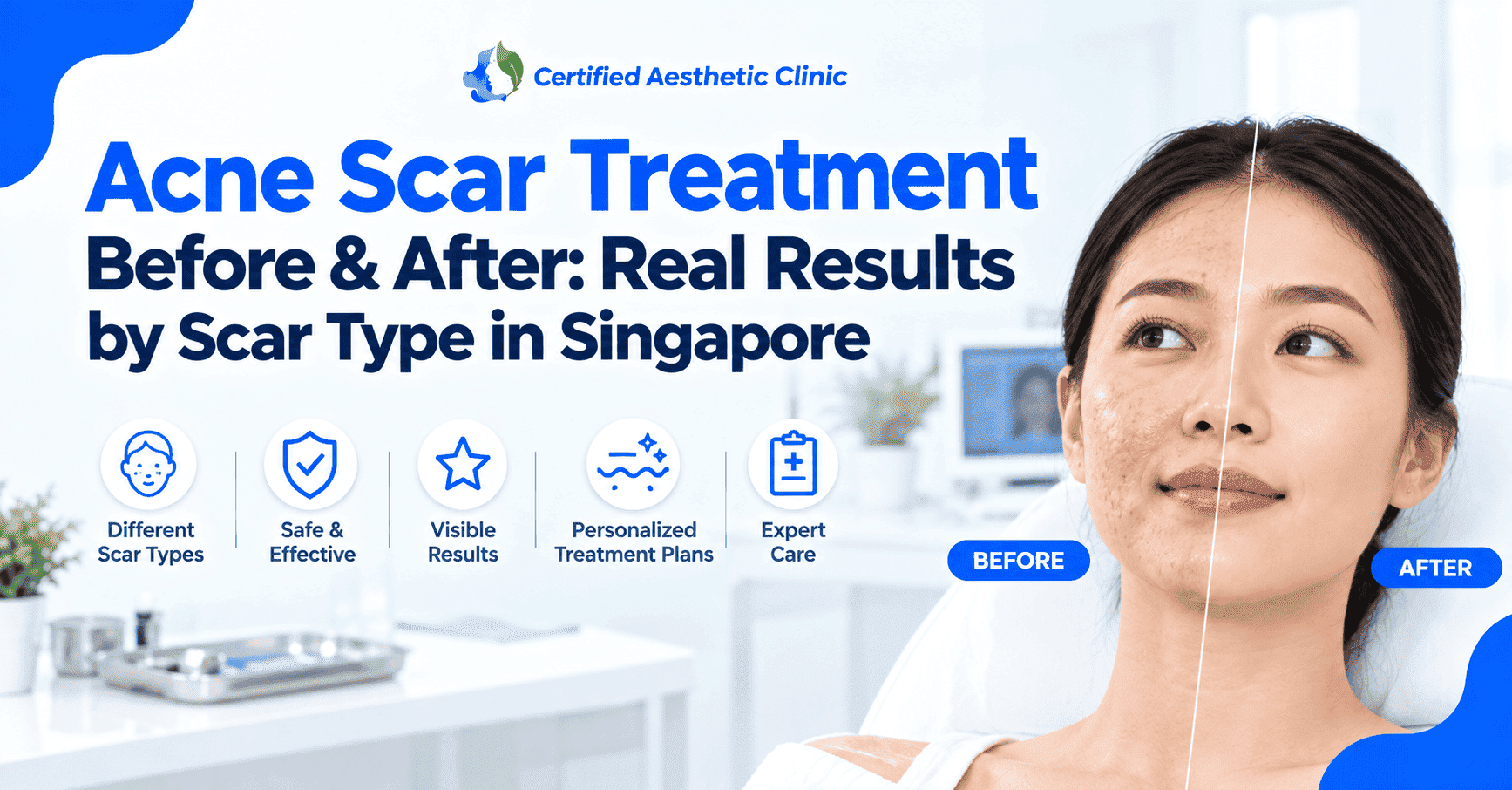
Acne scar before-and-after photos can make you hopeful, but they can also leave you unsure. Will the same treatment work for your skin? A deep pit, a wide dent and a raised scar each need a different approach.
If you are searching for the best acne scar treatment in Singapore, it helps to look beyond the most striking photo. Scar depth, skin tone and healing time all affect the result. Plus, softer light or early swelling can make scars look less visible.
This guide breaks down acne scar treatment before-and-after results by scar type. You will learn how to recognise common patterns, what changes treatment may bring, and how to judge results with a clearer picture of what to expect.
Acne scar treatment aims to make scars less visible. However, the change depends on their shape and depth. Some dents may become shallower, while raised scars may flatten.
| Scar type | Before treatment | Possible change after treatment |
|---|---|---|
| Ice pick | Narrow, deep pits | Less depth and weaker shadows |
| Boxcar | Dents with clear edges | Softer edges and shallower dents |
| Rolling | Broad dips and wavy skin | Smoother cheek contours |
| Raised | Firm bumps above the skin | Flatter, softer scars |
Flat red or brown acne marks are different from dents or raised scars. They affect skin colour rather than its shape, though both can occur together. So, fading a dark mark can make a photo look better without changing the depth of a nearby scar.
Ice pick scars look small on the surface, but they reach deep into the skin. Treatment can make these pits less noticeable, though some depth may remain.
These scars look like tiny holes with steep sides. They may resemble enlarged pores, but their shape extends deeper into the skin.
Deep pits may need focused treatment. Surface work alone can improve nearby texture while leaving deeper scars visible.
When looking for the best aesthetic clinic in Singapore, check whether the doctor offers treatments suited to your scar depth.
After healing, some pits may look shallower and cast softer shadows. However, a fair comparison needs matching light and enough time for swelling and redness to settle.
The aim is to make ice pick scars less visible, rather than promise skin with no trace of scarring.
Boxcar scars appear as rounded or oval indentations with well-defined edges. Treatments that will help in reducing the appearance of these scars include softening the edges as well as flattening them.
Boxcar scars are relatively shallow, which means that resurfacing could possibly be used to smooth out their sharpness. The depth of deeper scars may require targeted treatments to lift up or peel off the scar before resurfacing can be done.
Read more: Why Your Acne Scar Treatment Isn't Working (And What To Check Instead)
Laser resurfacing and microneedling can encourage collagen growth and reduce the appearance of suitable scars. However, neither approach suits every boxcar scar.
When comparing before-and-after results, look at the same scar’s edge, base and shadow. A softer border or higher base can show progress, but matching light and camera angles make that change easier to judge.
Rolling scars form broad dips that give the cheeks a wavy look. Treatment may reduce these dips and create a smoother surface, though some uneven texture can remain.
Bands of scar tissue can hold the skin down from beneath, creating dips with sloping edges. This pull is called tethering. When it is present, surface treatment alone may not fully address the scar.
Subcision releases the bands pulling a scar down, giving the skin room to rise. A doctor may combine it with resurfacing to improve texture or a suitable filler to add volume. The choice depends on the scar pattern and your skin’s needs.
Swelling after treatment can make dents look shallower for a short time. Therefore, early photos may overstate the lasting change. Follow-up images taken after healing, with matching light and camera angles, give a clearer view of progress.
Raised acne scars form firm bumps above the skin. Keloids extend beyond the original spot. Unlike depressed scars, they need care that reduces excess scar tissue rather than adds volume.
Raised scars, especially keloids, can return after treatment. Follow-up helps the doctor track changes and adjust care if the scar starts to grow again. Results may last, but a flatter scar does not guarantee permanent removal.
Choosing the best aesthetic clinic in Singapore for your needs also means looking for clear treatment details, honest advice and a plan for follow-up care.
Even a verified result cannot predict your own outcome. Scar depth, skin tone, healing and treatment choice can differ. Published research should also be labelled as study evidence, rather than presented as a Singapore clinic’s patient result.
Early swelling can make dents look shallower, while redness and crusting can hide progress. So, photos taken just after treatment may not show the lasting result.
As the skin builds new collagen, changes can develop over several months. With microneedling, some improvement may appear within weeks, but full results take longer.
Treatment guidance gives examples of 3–5 microneedling sessions and 3–6 TCA CROSS sessions. However, these ranges are not guaranteed; scar depth, skin response and progress checks help guide the session count.
Read more: What Causes Acne Scars and Can They Be Permanently Removed?
Acne scar before-and-after results make more sense when you know your scar type. Deep pits, wide dents and raised scars need different care, so the same treatment will not suit every face.
The best acne scar treatment in Singapore should match your skin, goals and healing needs. Meaningful progress may mean softer edges, shallower dips or flatter bumps, rather than complete scar removal.
Clear treatment details and photos taken after healing help you judge that progress. With realistic goals and regular reviews, you can better understand what has changed, what may still improve and which scars could remain visible after treatment.