
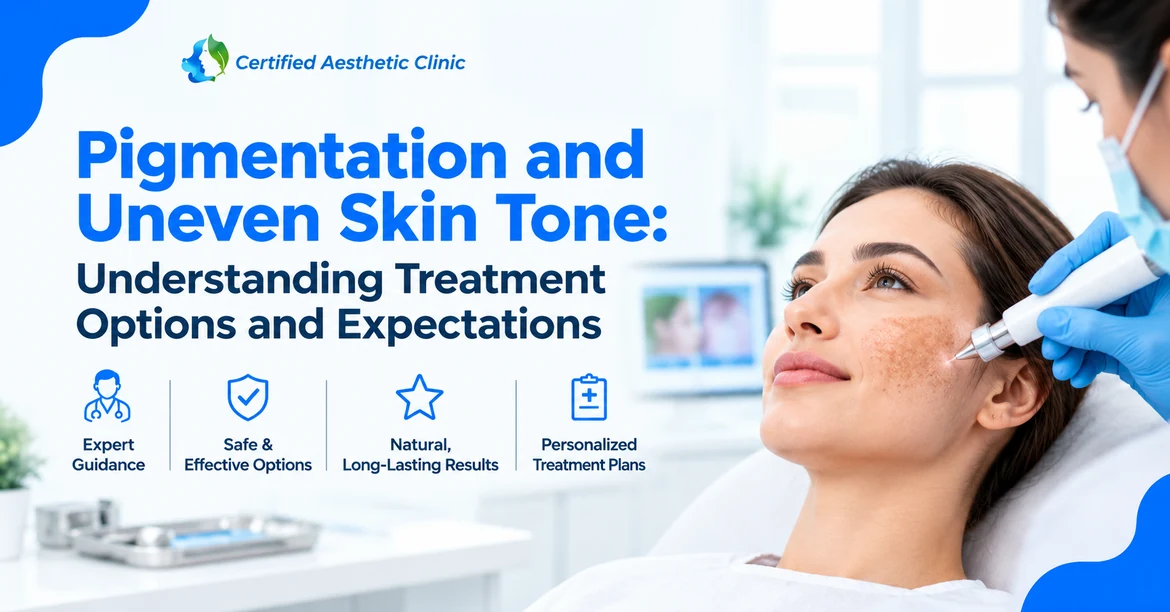
Uneven skin tone and pigmentation are common skin problems in humans. The intensity and causes of such skin issues may vary in people depending on age and skin type. The major symptoms of uneven skin tone and pigmentation arise in the form of acne, dark spots, patchy skin, dullness, sunspots, etc. To get rid of such uneven skin signs, you need to first understand their causes and then adopt the best possible treatment options available in the market. For instance, you can go for the best Pico laser treatment in Singapore, which is one of the popular options to get rid of all types of skin issues with laser technology. You can get this skin treatment at top skincare clinics in Singapore at affordable rates.
Many people want to understand what pigmentation and uneven skin tone problems are. Usually, both are the same type of skin issue, which arises due to irregular production of melanin pigment in the skin. Melanin is a natural skin pigment, which is produced by the cells called melanocytes. This skin pigment is responsible for human skin color and also protects skin from harmful U.V. (ultraviolet) rays from the sun. The excessive production of melanin pigment may cause skin pigmentation, patches, and dark spots on the face, neck, chest, hands, etc. Hence, it is necessary to understand the real causes of skin pigmentation first and then start treatment.
| Contributing Factor | Effect on the skin |
|---|---|
| Sun exposure | Stimulates melanin production |
| Hormonal changes | Can trigger Melasma |
| Acne and inflammation | Can leave dark marks |
| Genetics | Influences pigmentation susceptibility |
| Ageing | Contributes to sunspots and uneven tone |
| Skin irritation | May trigger excess pigmentation |
All the above factors can cause different uneven skin tones or pigmentation effects on the skin. The process of skin pigmentation involves three stages:
Some common types of skin pigmentation are as follows:
Thus, you need to identify which type of pigmentation you have and then start treatment.
Once you start identifying the symptoms of pigmentation, it is advised to seek a pigmentation consultation from the best skin pigmentation consultation and treatment dermatologist. They can advise you on the right type of skin pigmentation and its effective treatment options, too. You should go for a professional evaluation or consultation when you identify the following:
If you have persistent or high-level skin pigmentation, you should choose professional skin pigmentation treatment options. It is advised to first consult an expert dermatologist or skin specialist in the industry. For better results, you can approach authorized skin specialists and dermatologists’ clinics in Singapore, where you will get the best options for all types of skin pigmentation disorders.
Some popular types of skin pigmentation treatments in Singapore are as follows:
This type of skin pigmentation treatment involves the use of an effective chemical solution (glycolic acid) to exfoliate the damaged outer skin layer. This treatment is also effective in removing excessive build-up of melanin pigment. Also, it helps stimulate fresh cell renewal.
Pico Laser Treatment in Singapore is a light-based dermatological treatment that is used for treating pigmentation, acne spots, dark spots, and other specific skin problems. In addition, this laser treatment is also effective against other skin issues like melasma, tattoos, sun spots, and more. This laser treatment may require multiple sessions to treat skin pigmentation depending on the severity of the issue.
This is a minimally invasive skin pigmentation treatment that is done using sterile needles that are introduced into the skin to create controlled micro-injuries in the top layer of skin. This skin treatment should be done by an expert dermatologist only. This skin treatment is ideal for acne scars, stretch marks, enlarged pores, hyperpigmentation, fine lines, etc. You will get this type of skin pigmentation treatment at top skincare clinics in Singapore.
Many dermatologists use multi-treatment procedures to treat mild or severe skin pigmentation disorders. For mild skin pigmentation, dermatologists may choose effective skincare remedies like sunscreens, lotions, medications, etc. In addition, severe or hyperpigmentation issues can be treated through Pico laser treatment, surgery, and other minimally invasive treatments.
Thus, the above are some professional skin pigmentation treatments that can be effective in removing mild to chronic skin pigmentation issues. You can get all types of skin pigmentation treatments at top skincare clinics in Singapore at reasonable charges. So, whatever uneven skin tone treatments you require, you should get in touch with recommended dermatologists and skin specialists in Singapore. You will surely experience the right type of skin treatments at genuine prices.
Read more: Are the 48–88 Pico Laser Trial Deals in Singapore Actually Worth It?The right skin pigmentation treatment is necessary and can be determined after identifying the real causes or symptoms, pigmentation type, treatment processes, side effects or risks, number of sessions, etc. To overcome such pigmentation signs, you should consult with an expert dermatologist or skin specialist and start the treatment accordingly. For painless treatment and quick results for skin pigmentation, you can choose Pico Laser treatment in Singapore, which is one of the most popular choices these days.
Sometimes it is easy to distinguish pigmentation and redness of the skin by the color, pattern, and timely behavior of the spots. You may notice that both can make your skin appear uneven; however, they are caused by two different processes and need to be treated separately.
Yes! There is a fair chance that pigmentation can return even after your skin looks clearer. If skin continuously gets sun exposure, skin inflammation, hormonal changes, skincare treatments, etc., it can more likely lead to pigmentation again.
The reasons for skin pigmentation may vary from person to person. Also, different people may have different skin types, like dry, patchy, hard, soft, etc. Hence, the causes of pigmentation may be different in people that demand the different approaches to treat them. For instance, different types of pigmentation like melasma, sunspots, PIH, etc., require different approaches to treatment. So, it is advised to first go for a check-up or consultation with an expert dermatologist to identify your pigmentation type and then start treatment accordingly.
You should consider a few important factors when choosing between topical treatments and in-clinic procedures, such as
Yes! It can have worse effects on skin brightness when using different types of skincare products for pigmentation. By using different types of pigmentation treatment products, they can combine the ingredients and may cause side effects on the skin, like irritation, redness, allergy, and skin inflammation. Hence, it is advised to choose pigmentation treatment after consultation with a dermatologist and as per your skin type only.
Below are some ways to track whether your pigmentation treatment is actually working or not.
Identify all the above signs to track the progress of your pigmentation treatment over time. You should consult a dermatologist or skin specialist according to the tracked records and sustain the treatment or change it as per advice.
Your dark spots should be medically assessed instead of treated cosmetically if you start identifying the following signs:
Yes! Pigmentation treatment can be changed with your lifestyle or as per seasons like summer and winter. For example, if your routine pigmentation treatment is working perfectly in winter, it may not work well in summer due to excessive outdoor activities. Hence, it may cause harsh effects from sun exposure in summer. Now, you have to change the pigmentation treatment process according to the summer season. For better results, you should consult a pigmentation expert dermatologist to change the treatment as per lifestyle and season.
It is necessary to ask some important questions before committing to a pigmentation treatment package. Those questions are as follows:
Do not forget to ask all the above questions before booking a pigmentation treatment package at any skincare clinic.
Not exactly! Complete removal of pigmentation is not a realistic treatment goal, but it is more than that. It may aim to improve skin quality and immunity and sustain the same result for the long term. Besides, the skin needs to be protected and safety ensured for years.